INTEGRATED REHABILITATION TECHNOLOGY

Continuous gait and posture

monitoring.

Anywhere

WHAT WE DO

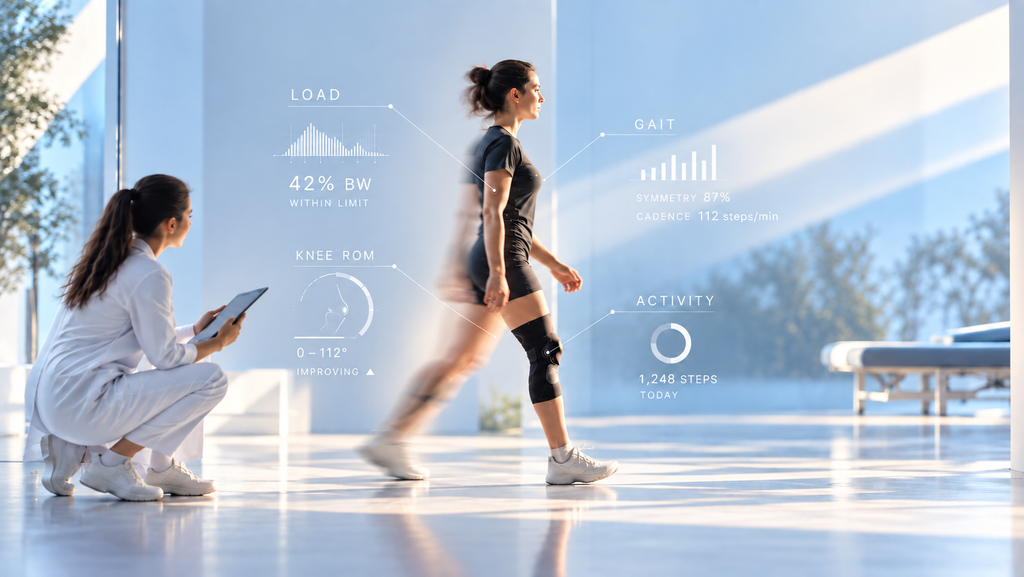
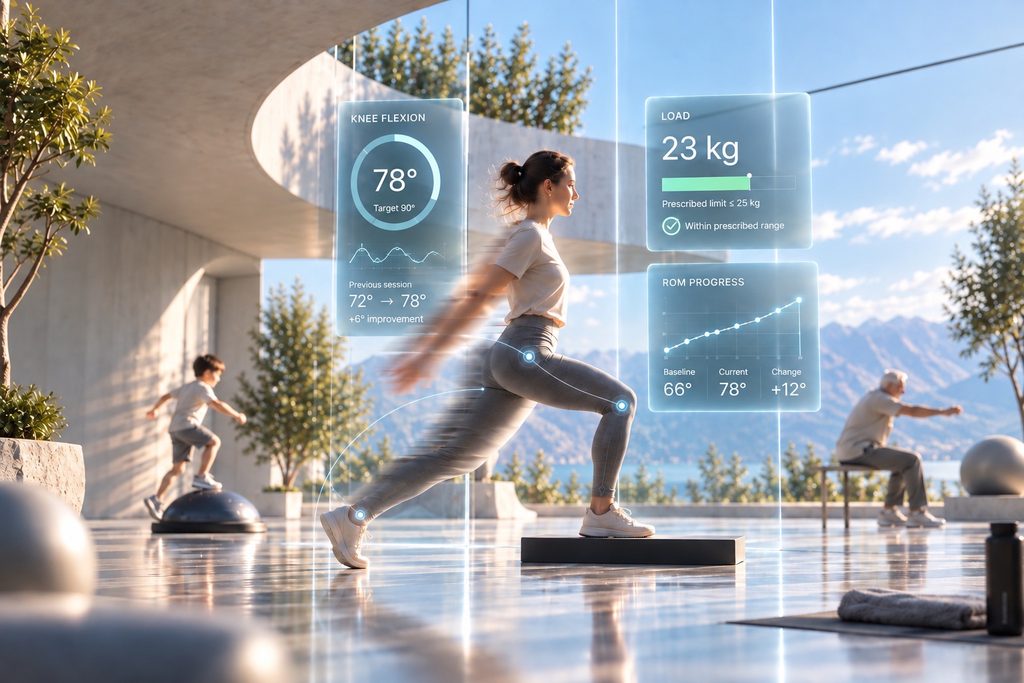
Our system combines an intelligent insole embedded in a dedicated technical sock with miniaturized IMU sensors applied via adhesive skin patches, enabling continuous acquisition of gait, posture, and joint range-of-motion parameters in both clinical and real-world settings.

REDEFINING REHABILITATION THROUGH OBJECTIVE BIOMECHANICAL DATA

Plantar Pressure
High-resolution analysis of plantar pressure distribution during static stance and dynamic gait, enabling objective assessment of load patterns, asymmetries, and pathological weight-bearing strategies.

Range of Motion (ROM)
Continuous, real-time measurement of joint kinematics across lower and upper limb joints, allowing objective evaluation of joint range of motion during functional, rehabilitative, and daily-life activities.

Gait Variability
Advanced spatio-temporal gait analysis including step length, cadence, symmetry indices, supporting the identification of functional impairments across orthopedic and neurological rehabilitation contexts.

Postural Compensation
Objective detection of postural adaptations and compensatory mechanisms through analysis of weight redistribution and upper-body kinematics, enabling early identification of overload patterns and secondary musculoskeletal risk.

INTEGRATED REHABILITATION ECOSYSTEM

The Patient

A clinical-grade orthopedic insole housed within a dedicated technical sock and connected to a patient application, enabling continuous monitoring of gait, load, movement, and postural alignment during daily activities, with or without shoes.

The Clinician

Physicians and physiotherapists access a secure clinical dashboard providing biomechanical data, including gait parameters, plantar pressure distribution, joint-related range of motion, and posture-related metrics, to support clinical and rehabilitative decision-making.

Actionable Insights

AI-driven data analysis enables the early identification of gait deviations, compensatory strategies, postural adaptations, and overload patterns, supporting timely intervention and helping reduce the risk of secondary musculoskeletal complications.

“Turning human movement into better decisions.”